This post includes affiliate links. This is at no extra cost to you, though we may earn a commission on any purchases you make via the links. For further information, please see our Privacy Policy.
Are you looking for book recommendations to read on your next trip to Budapest? Look no further than this post!
As a lifelong reader, nothing pleases me quite so much as picking up a paperback, heading to somewhere with a view, and delving into a good piece of literary fiction. My reading has changed over the years, as it always does with age and life experiences, and something I really love to do is to read a book by a local author, set in the place I am visiting! This series of blog posts aims to give you, a fellow traveller or reader, a paperback to pick up on your next journey, and whether you’re an avid reader or not, I’m sure there will be something for all to enjoy!
If you’re interested in going to Budapest, do check out our perfect 3 day itinerary to best enjoy the city!
Therefore, my recommendation for a great book to read in Budapest is… drumroll please…:

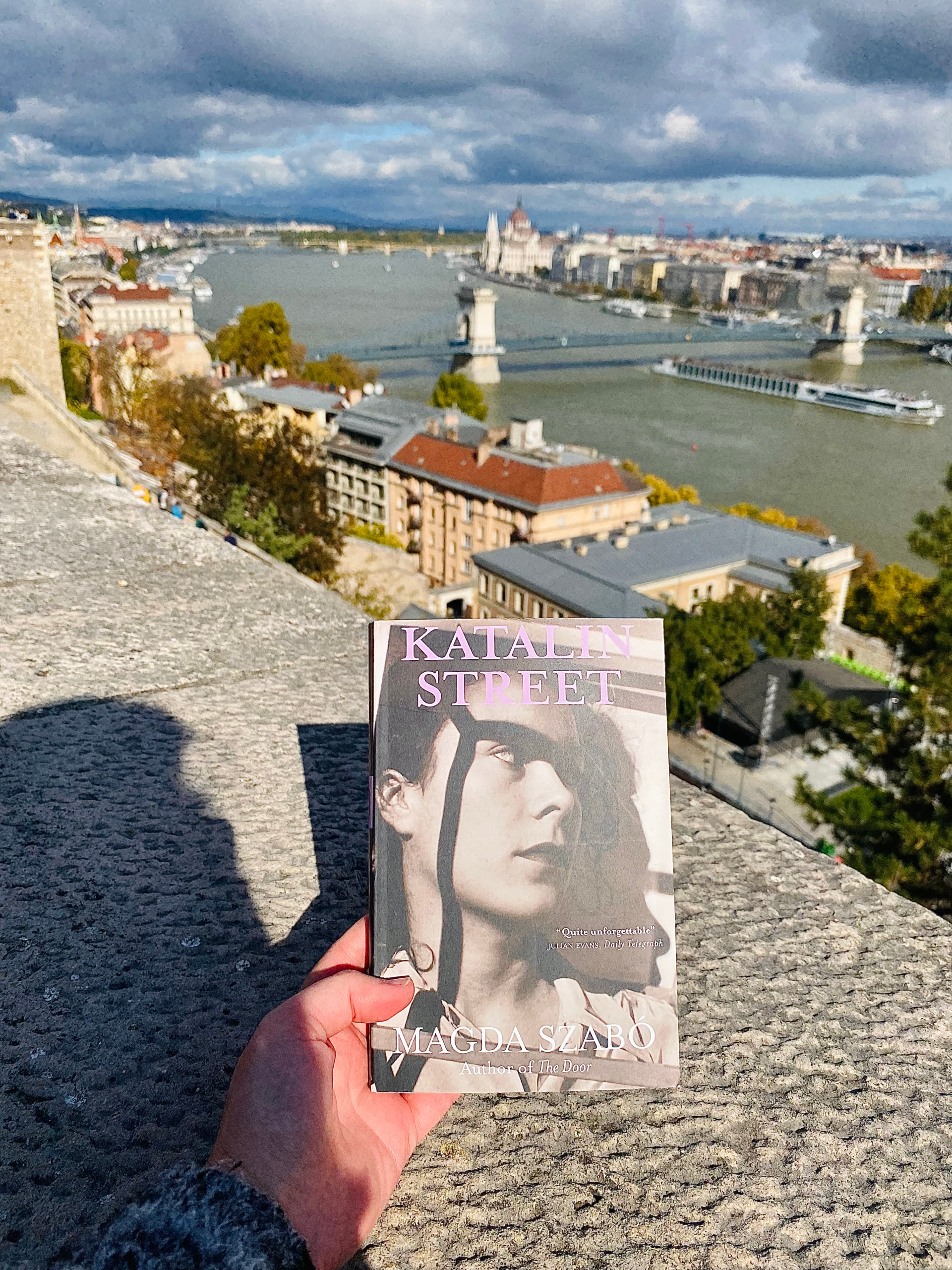
Katalin Street
Title: Katalin Street
Author: Magda Szabo
Originally published: 1969
Translated from Hungarian by Len Rix
(Click here to go to the Goodreads page for this book!)
Summary:
Three families live on Katalin Street. The four children live in each other’s gardens, and the adults are close friends – a Major; a headteacher and his wife; and a Jewish dentist. When the war comes to Hungary, and they find themselves living under German occupation, their lives are irrevocably altered when Henrietta Held, the daughter of the Jewish dentist, is murdered in her own garden. Post-war sees the families relocated to a Soviet-style apartment, and we follow each person closely as they deal with loss, change and guilt over Henrietta’s death.
My thoughts:
Thoughts on plot and themes
This novel took me an age to read, because, as the summary may suggest, it doesn’t make for easy reading. It is one of those books that needs time dedicated to it; that deserves to be highlighted and annotated and have each sentence appreciated. Szabo is a master of the beautiful sentence, and I found it so moving.
One of the key things to note about Katalin Street is that Henrietta lives on in a kind of afterlife. She appears in key moments of the other character’s lives, witnessing their loves and losses; their happiness and sadness; the political and social changes that continuously upend their lives. Henrietta lives between worlds, where she meets her murdered parents and the soldier who killed her, yet also travels to the living world, and can wander the streets of Budapest at will.
She watches as her childhood friends, Balint and Iren, fall in love but are torn apart by bad timing, by tragic events and guilt. Their relationship grows then stutters throughout the years. Meanwhile Iren’s sister, Blanka, struggling to come to terms with everything that happened, is exiled to elsewhere, where Henrietta watches from her other realm. Though all are close friends during childhood, the way they are torn apart means that none of them really achieve true happiness. This is a recurring theme throughout the novel – just as the reader begins to feel hope rising for these characters, they are brutally dashed down again, leaving moroseness and heaviness behind in its tumultuous wake.
Thoughts on structure
Structurally, the novel begins in 1934, when the Helds move to Katalin Street, where we follow them for a little while before catapulting forward in time to 1944 where the key events of the book take place. Then we move to 1952, where we see the impacts of Communism and the Soviet Union on the surviving but separated family members, then to 1961 where they all come back together. The time periods initially seem random, given that the jumps in time are unequal, but through this we learn about the impact of the war and postwar, through the eyes of each character. This book isn’t about what happened per se – that is more in the background – but it is about impacts on people’s lives, and it is very human, and very tragic.
This isn’t a novel for the faint-hearted. I struggled through it because it is written very poetically, very literary, but I found that at times it lacked a bit of feeling. It’s deep and thought-provoking, but I often find that with translated works, something integral gets lost along the way, and so I didn’t really connect to the characters, and felt like I was viewing them from afar, like Henrietta. Whether it is written purposely to be that way or not, I don’t know, but for me it was low in emotional impact, which surprised me given the events of the novel.
To conclude:
After going to Budapest and learning about both the German and Soviet occupations, I did appreciate Katalin Street. Whilst there, we visited the House of Terror, which I highly recommend putting on your Budapest itinerary. The House of Terror impacted us in a way we weren’t expecting – as it guides you through the events of the Soviet occupation after they ‘liberated’ Hungary from Nazi control. It was frightening to see how the building that now houses the museum was once used, and we came out of there deeply affected by everything we had seen and read. This carried on into my reading of Katalin Street, and so, whilst the book didn’t do exactly what I had hoped it would, I still found it engaging and thought-provoking, tragic and so very about the human experience in so many forms.
It is, indeed, a great choice of book to read whilst in Budapest.
Chat with us!
Have you read this book? Is there another book you would recommend someone read while visiting Budapest? Let me know in the comments!