A visit to the iconic House of Terror is a truly unmissable experience in Budapest! Before going to Budapest I thought I had an idea of what to expect. I know it as somewhere a lot of Brits go for stag and hen do’s, to drink and party and… that’s pretty much it.
The one single thing that I knew I absolutely had to see was the House of Terror. History is something that really interests me, and I love to learn about important periods of history in each place we visit. Obviously, Hungary is in a region of Europe that was severely impacted not only by the Second World War, but subsequently by the Soviet Union – a regime I knew a little about, but wanted to know more, especially as we were visiting a city that was so affected by it. Read on to find out why you should be putting the House of Terror into your Budapest itinerary!

If you are visiting Budapest, be sure to check out our perfect 3 day itinerary for this wonderful city!
This post includes affiliate links. This is at no extra cost to you, though we may earn a commission on any purchases you make via the links. For further information, please see our Privacy Policy.
Important stuff:
Location:
1062 District VI
How to get there:
Via Metro Line 1 to Oktogon Station.
Or take Tram 4/6!
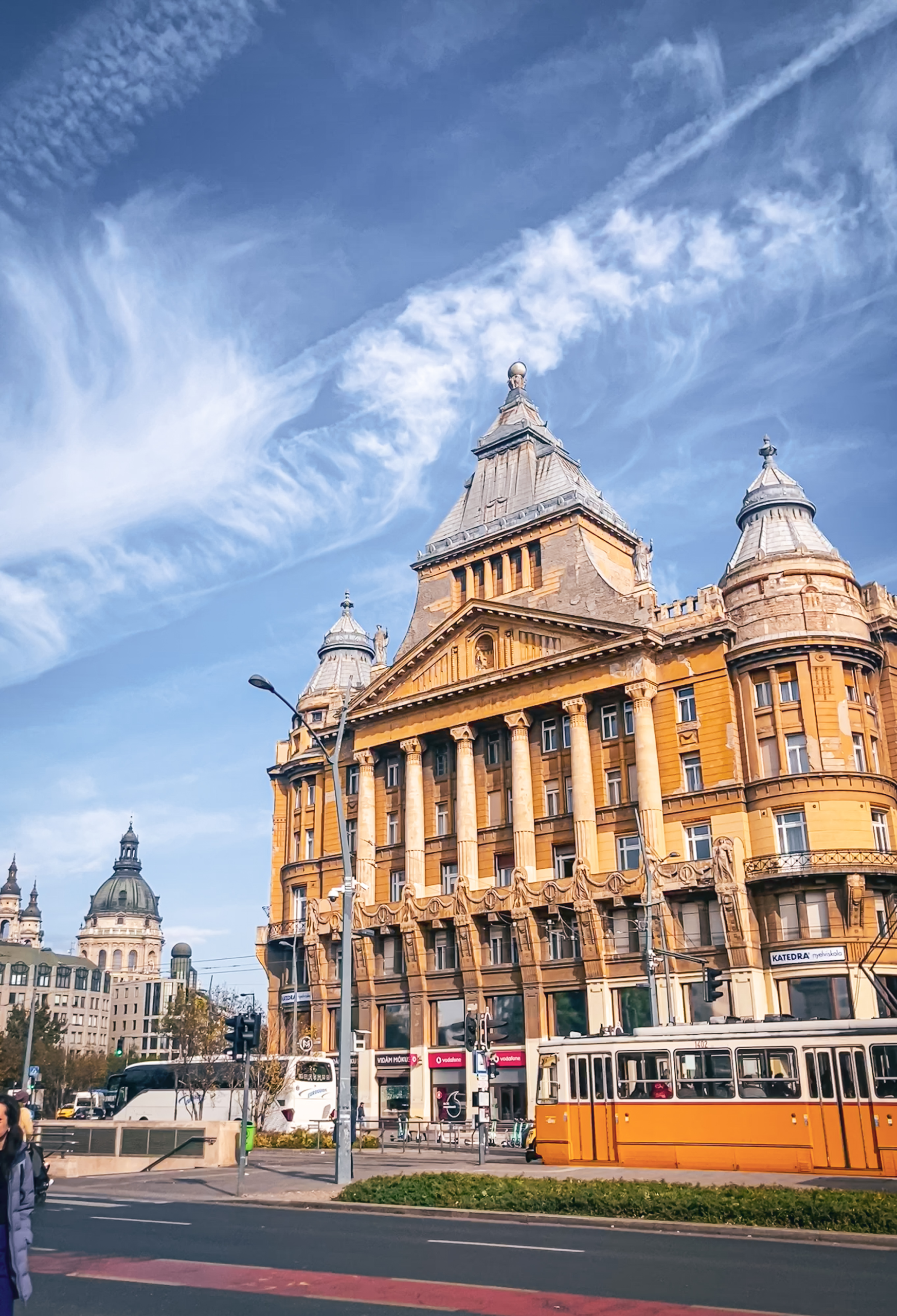
We actually ended up walking from Astoria, as it is easier with a pram. It wasn’t far, and along the way we walked through the old Jewish Ghetto – there is a marking on the pavement to denote where the boundary was.
Opening hours:
Tuesday to Sunday – 10am to 6pm
Cost:
4000 HUF per adult
Facilities:
There is a teeny cafe with some drinks and snacks on the ground floor, plus a locker room for valuables. In the cafe are toilets, including a large disabled one. There are lifts to all the floors, and the exhibitions themselves are all pram-friendly.
The museum:
The House of Terror is somewhere I truly believe every visitor to Budapest should go – it is an eye-opening journey back to the 1940s, firstly, when the Hungarian Nazi Party, the Arrow Cross, were in charge, and secondly when they were ‘liberated’ by the Soviets, only to be repressed under Soviet rule until 1991.
Unlike other museums I’ve seen, this one begins on the top floor, and first takes you through eight exhibition rooms. They detail the Double Occupation as it was called – the terror reign of Hungarian Nazi party, the Arrow Cross; the realities of the Gulag camps; the take over of the Soviet Union; and the everyday lives of the people of Hungary living under such dictatorships.
Down on the first floor, we moved onto the resettlement and deportation of hundreds of thousands of Hungarian people, as well as a peek into how ‘justice’ was served – how innocent people were coerced into ‘confessing’ crimes to show how ‘just’ and ‘fair’ the Party was.
The real headliner of the museum is the basement. I won’t ruin the experience by describing it. The unexpected nature of it is what makes it so impactful, but the basement level reveals the cells and torture chambers used by the Arrow Cross. It is something neither of us were anticipating seeing, and it brought you a bit close to the things we had been reading about on our way around the upper floors. At the very end there is an incredibly moving exhibition that reduced me to tears because everything that we had just learnt hits you in such a poignant way. For sure one of the most sobering places either of us have ever visited.
Our thoughts:
The whole way round the museum, there is so much to see and read. Upon entering each exhibition room you can pick up an information sheet in various languages, English included. By the time we left I had enough pages for a booklet! It is very interactive, and you really do learn lots. Sombreness is set by the dramatic, dark music, and the lighting tricks that are used are clever and atmospheric.
And the most terrible thing? This museum is in the actual building that was used as headquarters by the Arrow Cross, and later by the AVH (the secret police of the Soviet Union). By renovating it, they have designed the building to be a monument and memorial to the victims of the Double Occupation – the exterior is dark grey and black and stands out starkly against the other Renaissance-style architecture of the street. Around the centre of the walls are photographs and names of victims. It is truly memorialising them and ensuring that people do not forget the horrors that occurred during this time period.
I think that as horrifying as this museum is, and as emotive and tear-jerking as the exhibitions are, ultimately there is a feeling of hope for the future and pride in the country’s independence and freedom. Personally, I feel that learning about the impact of these horror regimes on the country is so important. We need to ensure that it isn’t forgotten, nor, hopefully, repeated. Equally as important is knowing how the country regained its freedom and moved on from it to a brighter future. I find it so incredible, and I left feeling kind of raw, whilst Ben described feeling haunted by it all. Neither of us spoke much upon leaving the building, just mulled it all over and tried to process it. It’s sobering, and it’s why I believe that visiting the House of Terror is an unmissable experience in Budapest.
With a baby:
Honestly? Not really somewhere for young children. It is dark, kind of spooky, and you need a few hours at least to get around to take everything in without feeling rushed.
However, with a 4 month old Pebble, it was relatively easy. We tired her out first, fed her in the cafe on the ground floor, and she snoozed in the pram for a while. When she did wake up, she was happy enough playing with her toys in the pram and when we were done, we stopped in the cafe for a while to play with her and feed her again. There was a disabled toilet there that I wheeled the pram into the change her (I couldn’t find a changing table, so our foldable changing mat really came in handy!), and it gave Ben and I time to digest everything we had just learnt.
Overall:
An absolute must-see in Budapest! Generally we don’t plan our trips with Pebble because we don’t want to feel disappointed if we don’t end up doing something. I’m so glad we did plan this excursion. Horrifying and disturbing, but we learnt so much!
If you do want more information about the museum in general, head over to the House of Terror website.
Chat with us!
Would you visit this iconic museum? Do you think you would consider the House of Terror to be an unmissable experience in Budapest? Chat with us in the comments!